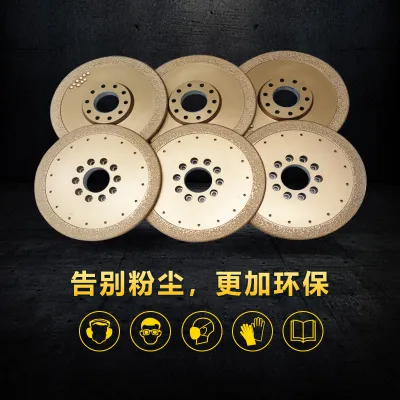
In the world of precision grinding, brazed diamond wheels stand out as a crucial tool. You might be wondering how to choose the right one for your specific needs. Let's dive deep into the core parameters of brazed diamond wheels and learn how to make the best selection.
First, let's understand the key parameters. The grit size of the diamond wheel determines the surface finish of the workpiece. For example, a finer grit size (e.g., 400 - 600) is suitable for precision grinding, while a coarser grit (e.g., 80 - 120) is better for rough grinding. The aperture of the wheel is also important. It needs to match the spindle of your grinding equipment. And the maximum rotational speed is a critical safety parameter. Exceeding this speed can lead to wheel breakage and potential hazards.
"The correct selection of diamond wheel parameters can significantly improve grinding efficiency and reduce costs," says an industry expert. "For instance, choosing the right grit size can increase the material removal rate by up to 30%."
When it comes to workpiece materials, take ductile iron as an example. Ductile iron has unique hardness and toughness characteristics. Its hardness is typically around 170 - 250 HB, and its high toughness requires a wheel with good self - sharpening ability. You need to choose a wheel with a suitable grit size and bond strength to ensure efficient grinding. For ductile iron, a medium - grit diamond wheel (e.g., 180 - 220) combined with a strong bond can provide excellent results.
Your equipment conditions play a vital role in wheel selection. Consider the spindle power of your grinding machine. A higher spindle power can support a larger and more aggressive wheel. The rotational speed range is also crucial. You need to match the maximum rotational speed of the wheel with the speed range of your equipment. For example, if your machine has a high - speed spindle (e.g., 3000 - 6000 RPM), you should choose a wheel with a high maximum rotational speed. And the clamping method of the wheel on the spindle affects the stability of the grinding process. Make sure the wheel is securely clamped to avoid vibrations.
In different grinding scenarios, such as surface grinding, cylindrical grinding, and precision forming grinding, specific wheel configurations are recommended. For surface grinding, a wheel with a large diameter and a medium - grit size can cover a larger area efficiently. In cylindrical grinding, a wheel with a suitable width and grit size can ensure a smooth and accurate finish. For precision forming grinding, a wheel with high precision and a fine grit size is essential.
Here is a parameter comparison table for different application scenarios:
| Application Scenario | Grit Size | Aperture | Maximum Rotational Speed |
|---|---|---|---|
| Surface Grinding | 120 - 180 | 32mm - 75mm | 3000 - 4500 RPM |
| Cylindrical Grinding | 180 - 220 | 20mm - 50mm | 4000 - 6000 RPM |
| Precision Forming Grinding | 400 - 600 | 10mm - 30mm | 5000 - 8000 RPM |
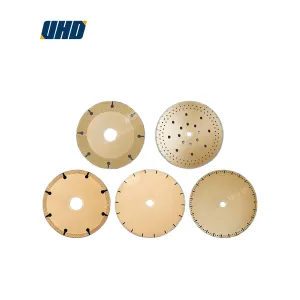
Our UHD brazed diamond wheels come with several technical advantages. The vacuum brazing process ensures a strong bond between the diamond particles and the substrate, improving the wheel's overall performance. The customizable design allows you to get a wheel that perfectly fits your specific requirements. And the excellent wear - resistance of our wheels can significantly reduce the frequency of wheel replacement, which means cost savings and increased efficiency. UHD truly helps you achieve efficient and stable processing.
The diamond wheel industry is constantly evolving. New materials and manufacturing processes are emerging. For example, the development of nanodiamond technology is expected to bring even higher precision and longer wheel life. By keeping up with these trends, you can stay ahead in the market and make more informed decisions.
Do you have any questions about diamond wheel selection? Leave your comments below and let's discuss!
Explore Our UHD Brazed Diamond Wheels Now!
 151
|
151
|
 Vacuum brazed diamond grinding wheels
Automatic grinding wheels
Cast iron grinding
Metal processing efficiency
Grinding wheel durability
490
|
Manual diamond grinding wheels
High - efficiency grinding solutions
Industrial dust control
Metal processing safety
Resin bond replacement
68
|
green grinding technology
vacuum brazed diamond grinding wheels
sustainable development in metal processing
environmentally friendly grinding tools
high - efficiency precision machining
90
|
vacuum brazed diamond wheel
cast iron grinding solution
automatic grinding diamond wheel
high precision grinding
superhard tool replacement
Vacuum brazed diamond grinding wheels
Automatic grinding wheels
Cast iron grinding
Metal processing efficiency
Grinding wheel durability
490
|
Manual diamond grinding wheels
High - efficiency grinding solutions
Industrial dust control
Metal processing safety
Resin bond replacement
68
|
green grinding technology
vacuum brazed diamond grinding wheels
sustainable development in metal processing
environmentally friendly grinding tools
high - efficiency precision machining
90
|
vacuum brazed diamond wheel
cast iron grinding solution
automatic grinding diamond wheel
high precision grinding
superhard tool replacement
 480
|
High - performance diamond saw blades
Extension of metal cutting tool life
Cast iron cutting solutions
Vacuum sintering technology
Technical support for durable diamond saw blades
480
|
High - performance diamond saw blades
Extension of metal cutting tool life
Cast iron cutting solutions
Vacuum sintering technology
Technical support for durable diamond saw blades







.png?x-oss-process=image/resize,m_fill,h_300,w_300/format,webp)