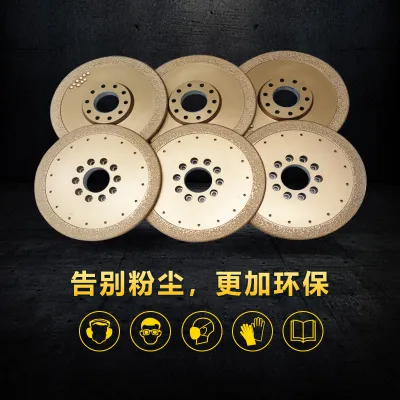
You're not alone if you’ve ever wasted time—and money—on a diamond grinding wheel that didn’t perform as expected. Whether you’re a production engineer or procurement manager, selecting the correct braze-bonded diamond wheel for ductile iron parts can make or break your process efficiency, surface finish quality, and overall cost per part.
Let’s cut through the noise:
“After switching to UHD’s vacuum-brazed wheels, our team reduced wheel change frequency by 40% and improved surface consistency from Ra 0.8μm to Ra 0.4μm.” — Mechanical Engineer, Automotive Supplier, Germany
Here’s how to match your application with the right wheel:
| Application Type | Recommended Grain Size | Typical Use Case |
|---|---|---|
| Coarse Grinding (Car Axles) | 60–100 mesh | High material removal rate, low precision tolerance |
| Fine Grinding (Bearing Rings) | 150–200 mesh | Surface finish critical, minimal heat generation |
| Internal Grinding (Die Cavities) | 120–180 mesh | Complex geometry, tight tolerances |
These aren't rules—they’re starting points. Always test under real conditions. And remember: even the best wheel fails when paired with wrong coolant flow or improper dressing frequency.
The future of diamond grinding isn’t just about sharper edges—it’s about smarter design. UHD’s new high-density grain layout increases cutting efficiency by up to 25%, while reducing energy consumption. Plus, our eco-friendly brazing process means no toxic residues, aligning with EU REACH standards.
Pro Tip: Don’t wait until your current wheels fail—schedule a free consultation with our technical team. We’ll analyze your setup and recommend a tailored configuration based on actual data from similar applications.

 151
|
151
|
 Vacuum brazed diamond grinding wheels
Automatic grinding wheels
Cast iron grinding
Metal processing efficiency
Grinding wheel durability
493
|
UHD vacuum brazed diamond grinding rods
high-precision grinding
cast iron processing
brazed grinding rod application cases
grinding technology innovation
492
|
vacuum brazed diamond wheels
automatic grinding wheels
cast iron processing wheels
high - performance diamond wheels
metal processing tools
473
|
UHD vacuum brazed diamond grinding rods
grinding process optimization
cast iron precision grinding
high-performance grinding tools
patented brazing technology
269
|
Manual diamond grinding wheels
High - performance grinding wheels
Grinding efficiency
Dust control
Industrial grinder accessories
Vacuum brazed diamond grinding wheels
Automatic grinding wheels
Cast iron grinding
Metal processing efficiency
Grinding wheel durability
493
|
UHD vacuum brazed diamond grinding rods
high-precision grinding
cast iron processing
brazed grinding rod application cases
grinding technology innovation
492
|
vacuum brazed diamond wheels
automatic grinding wheels
cast iron processing wheels
high - performance diamond wheels
metal processing tools
473
|
UHD vacuum brazed diamond grinding rods
grinding process optimization
cast iron precision grinding
high-performance grinding tools
patented brazing technology
269
|
Manual diamond grinding wheels
High - performance grinding wheels
Grinding efficiency
Dust control
Industrial grinder accessories






.png?x-oss-process=image/resize,m_fill,h_300,w_300/format,webp)

.png?x-oss-process=image/resize,m_fill,h_300,w_300/format,webp)