.png?x-oss-process=image/resize,h_400,m_lfit/format,webp)
Case Study • Metalworking • Foundry Deburring
In heavy-duty metalworking, “good enough” abrasive tools quietly become a tax on throughput: frequent wheel changes, inconsistent edge quality, and dust-heavy grinding that drains labor and morale. This case study looks at how high-performance vacuum brazed diamond cutting & grinding discs helped foundry operators upgrade cast iron deburring from a recurring bottleneck into a controllable, measurable process improvement.
1) The bottleneck no one budgets for: consumable wear, dust, and unstable results
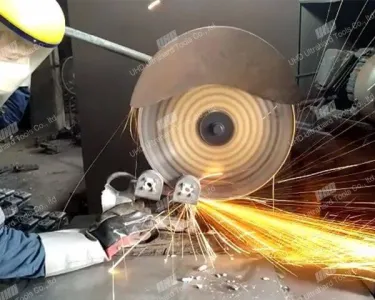
Foundries and metal fabrication shops often rely on resin-bonded abrasive wheels for cast iron deburring because they are familiar and easy to source. Yet, on rough casting gates, risers, and flash lines, those wheels can wear rapidly—especially when operators push harder to keep up with takt time. The result is a loop: higher pressure leads to more heat, faster wheel breakdown, more dust, and more rework.
Common symptoms on the floor
- Wheel changes interrupt flow every 10–30 minutes on aggressive cast iron edges
- Dimensional drift and edge rounding due to wheel glazing and uneven wear
- Dust-heavy operation increases cleanup time and PPE burden
- Operator fatigue and risk rise as more force is applied to maintain removal rate
Why it matters (beyond consumable spend)
In many plants, the true cost is hidden in lost minutes, extra handling, and quality escapes. A tool that lasts longer is useful—but a tool that stabilizes removal rate and reduces rework can change the economics of the entire deburring cell.
.png)
2) The industrial-grade alternative: vacuum brazed diamond discs designed for metal removal
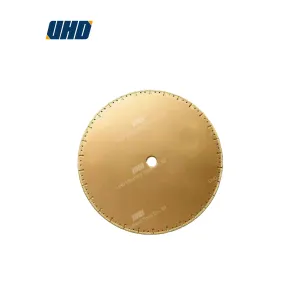
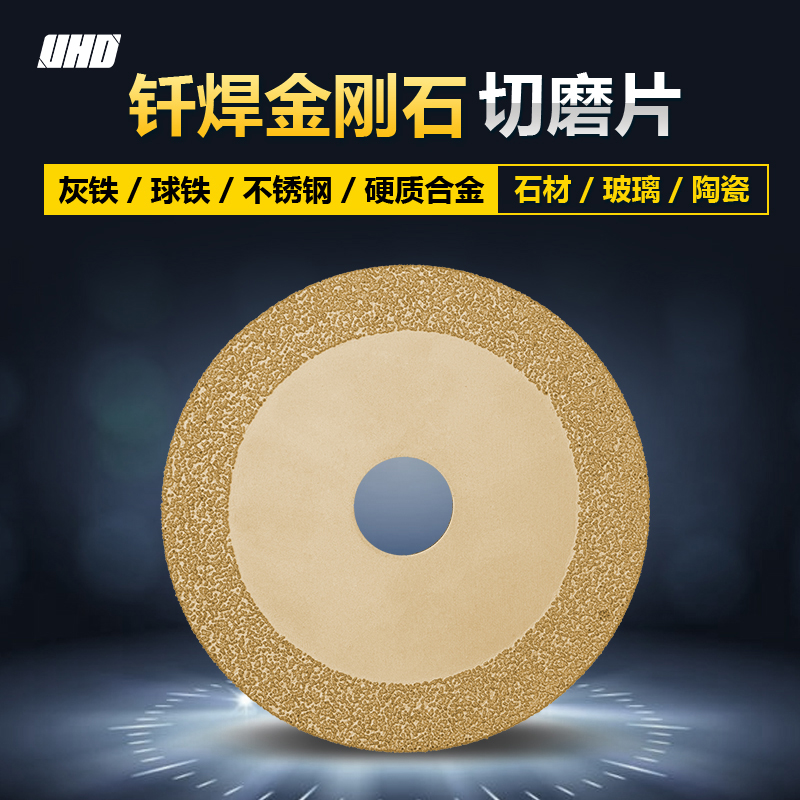
The solution evaluated in these deployments was a high-performance vacuum brazed diamond cutting & grinding disc (often referred to as vacuum brazed diamond grinding wheel/disc). Instead of relying on resin to hold abrasive grains, vacuum brazing metallurgically bonds diamond grit to the steel body. That bond strength helps keep cutting points exposed longer under high load—particularly relevant for abrasive cast iron surfaces.
Core performance claims (benchmarked in production)
Service life
Up to 80–120× longer vs. resin wheels in harsh cast iron deburring*
Changeover reduction
90–98% fewer disc changes per shift*
Cycle-time impact
30–55% faster deburring on gates/flash*
*Reference ranges compiled from typical foundry deburring trials on gray iron/ductile iron parts, using 100–125 mm angle grinders and similar operator skill levels. Results vary by casting hardness, burr height, and RPM control.
The “industrial-grade” difference is not only about durability. It’s about process stability: when a disc stays sharp longer, operators can use less force, maintain more consistent edges, and reduce heat-related damage. In the words many production managers use when approving upgrades: “Let every dollar translate into production effectiveness.”
Or, put more bluntly for procurement reviews: “Not every disc deserves to be called industrial-grade.”
3) Case evidence: two cast iron deburring scenarios and what changed
Case A — Medium foundry, manual deburring cell (gray iron pump housings)
A mid-size foundry running gray iron pump housings faced high variability in edge finish after gating removal. Operators routinely replaced resin-bonded wheels to keep removal rate acceptable. The plant’s internal audit showed that “wheel-related pauses” (change, re-clamp, re-check) were consuming meaningful time across the shift.
| Metric (per shift) | Resin-bonded wheel (baseline) | Vacuum brazed diamond disc | Observed effect |
|---|---|---|---|
| Disc changes | 12–18 | 0–2 | ~90%+ reduction |
| Avg. deburring time / part | 2.8–3.4 min | 1.6–2.1 min | 30–45% faster |
| Rework due to edge inconsistency | 2.0–3.5% | 0.8–1.5% | ~40–60% reduction |
| Operator-reported fatigue (end of shift) | High | Moderate | Less pushing force required |
“The biggest surprise wasn’t just disc life—it was consistency. Once we stopped chasing sharpness, the line calmed down. Fewer stops, fewer arguments about edge finish.”
— Production Supervisor, Cast Iron Deburring Cell
Case B — High-mix casting shop, heavy flash removal (ductile iron brackets)
A high-mix jobbing foundry processed ductile iron brackets with irregular flash thickness. The team needed a tool that could tolerate aggressive stock removal without frequent dressing or replacement. Vacuum brazed diamond discs were introduced with segmented geometry to improve chip evacuation and reduce heat buildup on extended runs.
Before
- Frequent wheel loading and glazing
- Edge overheating risk on long passes
- Dust accumulation increased cleanup intervals
After
- Stable removal rate across most of the shift
- Lower operator pressure, better control around critical edges
- Consumable-related downtime reduced by ~85–95%
In practical terms, the plant estimated that the operational cost linked to disc consumption and changeover labor dropped by 90%+ on the most aggressive deburring stations. The saving wasn’t purely the disc itself; it came from eliminating the “micro-stops” that add up across dozens of parts.
4) Technical breakdown: why vacuum brazing and segmented geometry matter
Vacuum brazing (the bonding advantage)
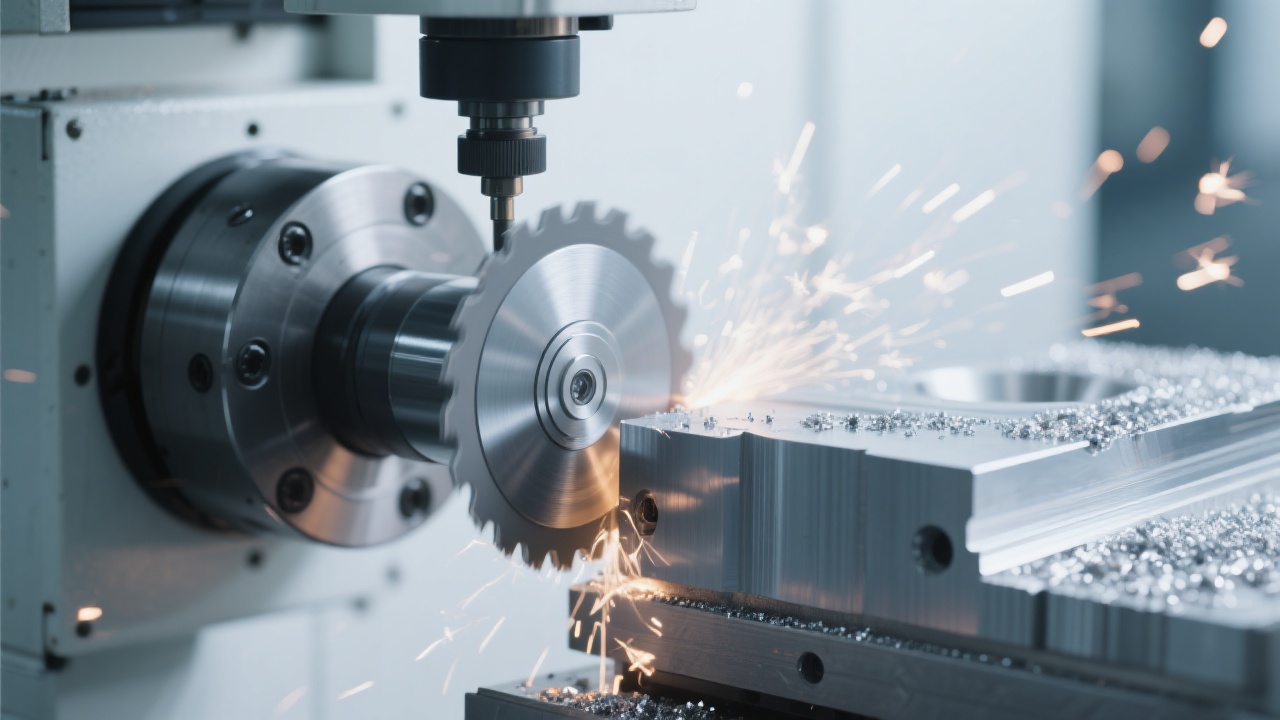
In vacuum brazing, diamond grains are bonded through a brazed alloy layer under controlled atmosphere, improving grain retention at high load. Compared with resin bonds, the abrasive points remain exposed longer, helping sustain cutting action instead of rubbing—which is where heat, dust, and rapid wear often begin.
Segmented design (cooling + evacuation)
Segment gaps provide pathways for debris evacuation and airflow. On cast iron, where powder-like swarf can pack into the cutting zone, that geometry helps maintain bite and can reduce localized temperature spikes—especially useful for operators running long, continuous passes.
Material compatibility (real-world tolerance)
While optimized here for cast iron deburring, many users deploy vacuum brazed diamond discs across mixed workloads—gray iron, ductile iron, certain hard welds, and abrasive metal surfaces—reducing tool variety and simplifying procurement. The key is matching grit and segment profile to the target burr height and finish requirement.
Suggested infographic ideas (for engineering & management buy-in)
- Before/After bar chart: disc changes per shift, minutes lost to changeover, and rework percentage
- Process flow: “Deburr → Inspect → Rework” loop shrink after tool upgrade
- Cost-stack chart: consumables + labor interruption + quality loss (to show why 90%+ operational reduction is plausible)
5) From a better disc to a better line: the strategic value of stable grinding
Tool upgrades are sometimes dismissed as “small improvements.” Yet in deburring-heavy operations, a more stable grinding tool can unlock compounding gains: fewer stoppages, steadier inspection outcomes, cleaner work zones, and improved operator confidence. For manufacturing leadership, this matters because it turns deburring from a variable craft step into a repeatable capability—one that scales with volume and workforce changes.
The most telling indicator across these applications was not a single number—it was predictability. Once disc life extended from minutes to shifts (or multiple shifts), planning improved: supervisors reduced buffer time, quality teams saw fewer edge-related nonconformities, and operators no longer compensated with excessive force.
Ready to validate the same gains on your cast iron parts?
If your team is still losing hours to wheel changes, dust-heavy grinding, or rework loops, it’s time to test an industrial solution designed for aggressive metal removal. Bring your part drawings, burr profiles, and current cycle times—then benchmark performance with a disc built for foundry reality.
Request a Vacuum Brazed Diamond Cutting & Grinding Disc RecommendationTypical evaluation inputs: material (gray/ductile iron), burr height range, grinder RPM, target edge spec, and current tool consumption per shift.
.png?x-oss-process=image/resize,m_fill,h_300,w_300/format,webp)

.png?x-oss-process=image/resize,m_fill,h_300,w_300/format,webp)